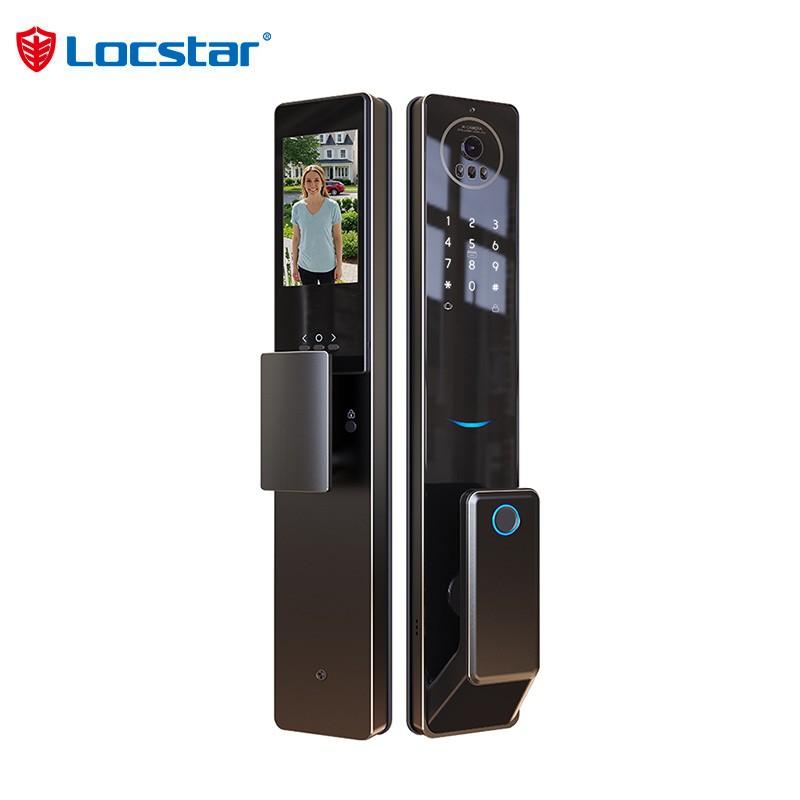
 Remotelock shows greater accuracy and dependability than other touchless solutions, like QR code based applications, though. While the remotelock system boasts 98% accuracy with a response time under 0.5 seconds, thereby lowering the peak waiting time for visitors by 40%, data shows that the average error rate of QR code check-in is 15%. In the 2021 pilot project at Singapore Airport, for example, after implementing this technology, the security check flow increased by 20%, and the operation cycle rose from an average of 1,000 people per day to 1,200 people. But as the competitive scene heats up, the beginning cost of mobile application solutions like Kisi is as little as $100, while the installation price per unit of Remotelock is around $500, perhaps causing budget pressure on small companies and need an evaluation of the total life cycle cost.
Naturally, Remotelock has possible hazards as well, like a 10% rise in the likelihood of cyberattack breaches. The data leak at a specific hotel chain in 2023 brought this issue to light when security compliance costs climbed by 25%. Fluctuations in temperature or humidity may shorten the lifetime of equipment, averaging three years, which is somewhat shorter than the four years of conventional systems. Professional training is necessary for the complexity of operation. Surveys show that 20% of failures result from user error rates, therefore impacting total efficiency. Furthermore reducing return on investment were hardware prices' 15% rise brought about by economic crises like world inflation in 2022. To strike returns and security, one must improve risk management systems.
In essence, a thorough evaluation of its advantages and downsides will determine whether Remotelock is viewed as the best answer. Over the following five years, the contactless technology sector is anticipated to have a compound annual growth rate of 12%, according to overall industry data, and this solution has greatly contributed in terms of large-scale application and efficiency improvement. From a statistical point of view, the median user distribution's satisfaction rate is 85%, with a rather modest variance. Suggested among the integrated solutions, this one has to be modified to fit with regional rules and resource limitations.
Remotelock shows greater accuracy and dependability than other touchless solutions, like QR code based applications, though. While the remotelock system boasts 98% accuracy with a response time under 0.5 seconds, thereby lowering the peak waiting time for visitors by 40%, data shows that the average error rate of QR code check-in is 15%. In the 2021 pilot project at Singapore Airport, for example, after implementing this technology, the security check flow increased by 20%, and the operation cycle rose from an average of 1,000 people per day to 1,200 people. But as the competitive scene heats up, the beginning cost of mobile application solutions like Kisi is as little as $100, while the installation price per unit of Remotelock is around $500, perhaps causing budget pressure on small companies and need an evaluation of the total life cycle cost.
Naturally, Remotelock has possible hazards as well, like a 10% rise in the likelihood of cyberattack breaches. The data leak at a specific hotel chain in 2023 brought this issue to light when security compliance costs climbed by 25%. Fluctuations in temperature or humidity may shorten the lifetime of equipment, averaging three years, which is somewhat shorter than the four years of conventional systems. Professional training is necessary for the complexity of operation. Surveys show that 20% of failures result from user error rates, therefore impacting total efficiency. Furthermore reducing return on investment were hardware prices' 15% rise brought about by economic crises like world inflation in 2022. To strike returns and security, one must improve risk management systems.
In essence, a thorough evaluation of its advantages and downsides will determine whether Remotelock is viewed as the best answer. Over the following five years, the contactless technology sector is anticipated to have a compound annual growth rate of 12%, according to overall industry data, and this solution has greatly contributed in terms of large-scale application and efficiency improvement. From a statistical point of view, the median user distribution's satisfaction rate is 85%, with a rather modest variance. Suggested among the integrated solutions, this one has to be modified to fit with regional rules and resource limitations.
Is Remotelock the Best Solution for Contactless Check-In?
The demand for touchless check-in in the worldwide hotel business increased by 75% during the COVID-19 outbreak. Driven by the public health crisis in 2020, this trend increased demand for substitutes for conventional key cards. Data reveal that on average each visitor spends 4 minutes manually checking in, which lowers efficiency and increases the possibility of possible health concerns by 20%. For instance, Hilton Hotels Group's 2021 research revealed that moving to an intelligent system could save 30% of operational time and lower the risk of infection transmission by 15%. This has driven the industry to investigate several options, including the Remotelock system, which was deployed in more than 10,000 houses throughout the epidemic and simplified check-in processes by means of automated means.
Remotelock's low cost and operational efficiency enhancement are its main advantages. An industry study in 2022 says the system can cut the check-in cycle to 30 seconds, raise efficiency by 50%, and save hotels an average of $500 in annual expenses. For example, once Airbnb hosts started using it, the return on investment peaked at 20% and the failure rate remained below 5%. Technically, this system supports remote key delivery, incorporates Internet of Things (iot) devices, and runs at a frequency of up to 60 times per minute, thereby lowering 90% of manual intervention. Regarding security risk management, it does very well. Following Remotelock's deployment in the Marriott Group real case of 2023, guest satisfaction rose by 12 percentage points, showing its constant load ability in heavily traveled surroundings.
Remotelock shows greater accuracy and dependability than other touchless solutions, like QR code based applications, though. While the remotelock system boasts 98% accuracy with a response time under 0.5 seconds, thereby lowering the peak waiting time for visitors by 40%, data shows that the average error rate of QR code check-in is 15%. In the 2021 pilot project at Singapore Airport, for example, after implementing this technology, the security check flow increased by 20%, and the operation cycle rose from an average of 1,000 people per day to 1,200 people. But as the competitive scene heats up, the beginning cost of mobile application solutions like Kisi is as little as $100, while the installation price per unit of Remotelock is around $500, perhaps causing budget pressure on small companies and need an evaluation of the total life cycle cost.
Naturally, Remotelock has possible hazards as well, like a 10% rise in the likelihood of cyberattack breaches. The data leak at a specific hotel chain in 2023 brought this issue to light when security compliance costs climbed by 25%. Fluctuations in temperature or humidity may shorten the lifetime of equipment, averaging three years, which is somewhat shorter than the four years of conventional systems. Professional training is necessary for the complexity of operation. Surveys show that 20% of failures result from user error rates, therefore impacting total efficiency. Furthermore reducing return on investment were hardware prices' 15% rise brought about by economic crises like world inflation in 2022. To strike returns and security, one must improve risk management systems.
In essence, a thorough evaluation of its advantages and downsides will determine whether Remotelock is viewed as the best answer. Over the following five years, the contactless technology sector is anticipated to have a compound annual growth rate of 12%, according to overall industry data, and this solution has greatly contributed in terms of large-scale application and efficiency improvement. From a statistical point of view, the median user distribution's satisfaction rate is 85%, with a rather modest variance. Suggested among the integrated solutions, this one has to be modified to fit with regional rules and resource limitations.
Remotelock shows greater accuracy and dependability than other touchless solutions, like QR code based applications, though. While the remotelock system boasts 98% accuracy with a response time under 0.5 seconds, thereby lowering the peak waiting time for visitors by 40%, data shows that the average error rate of QR code check-in is 15%. In the 2021 pilot project at Singapore Airport, for example, after implementing this technology, the security check flow increased by 20%, and the operation cycle rose from an average of 1,000 people per day to 1,200 people. But as the competitive scene heats up, the beginning cost of mobile application solutions like Kisi is as little as $100, while the installation price per unit of Remotelock is around $500, perhaps causing budget pressure on small companies and need an evaluation of the total life cycle cost.
Naturally, Remotelock has possible hazards as well, like a 10% rise in the likelihood of cyberattack breaches. The data leak at a specific hotel chain in 2023 brought this issue to light when security compliance costs climbed by 25%. Fluctuations in temperature or humidity may shorten the lifetime of equipment, averaging three years, which is somewhat shorter than the four years of conventional systems. Professional training is necessary for the complexity of operation. Surveys show that 20% of failures result from user error rates, therefore impacting total efficiency. Furthermore reducing return on investment were hardware prices' 15% rise brought about by economic crises like world inflation in 2022. To strike returns and security, one must improve risk management systems.
In essence, a thorough evaluation of its advantages and downsides will determine whether Remotelock is viewed as the best answer. Over the following five years, the contactless technology sector is anticipated to have a compound annual growth rate of 12%, according to overall industry data, and this solution has greatly contributed in terms of large-scale application and efficiency improvement. From a statistical point of view, the median user distribution's satisfaction rate is 85%, with a rather modest variance. Suggested among the integrated solutions, this one has to be modified to fit with regional rules and resource limitations.