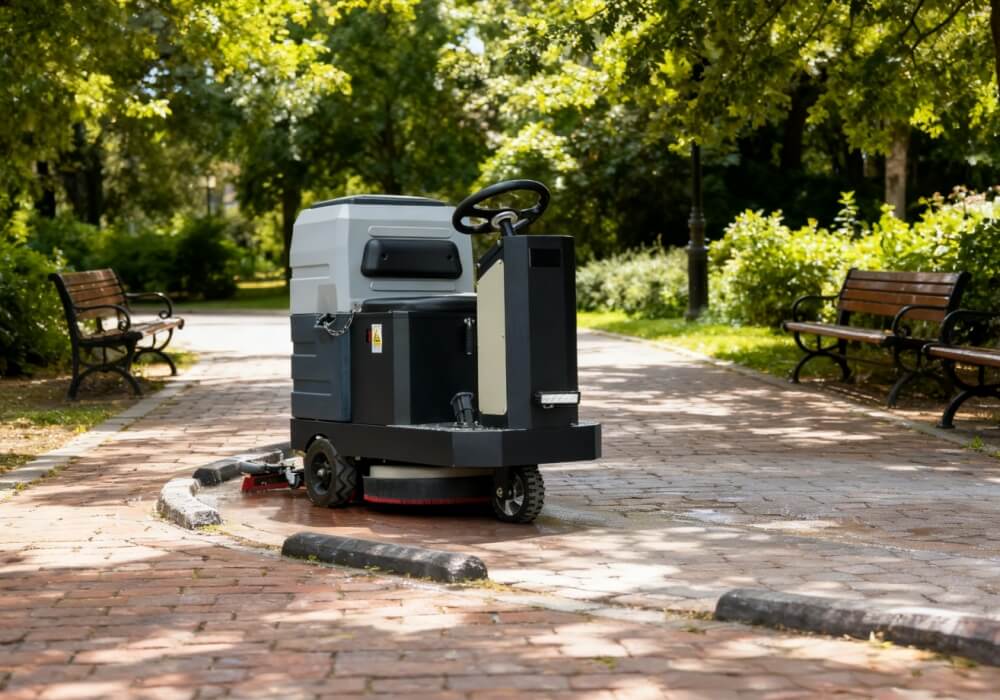
Factory floor cleaning requires equipment that can remove oil, dust, and metal shavings without interrupting production. A suitable cleaning system can reduce floor contamination by 30%–50% in industrial environments, while regular maintenance programs help factories improve safety conditions and equipment reliability. Modern manufacturing sites use specialized machines to collect different types of waste because oil residue, fine particles, and metal chips require different cleaning methods.
Manufacturing floors face continuous contamination from daily operations. CNC machining, welding, grinding, stamping, and assembly processes often release cutting oil, steel fragments, aluminum particles, and fine dust. A production area operating 16 hours per day may collect several kilograms of debris within a single shift, depending on production volume and material type.
Oil is one of the most common substances found on industrial floors. Hydraulic systems, lubricated machines, and metal cutting processes can leave oil layers that increase slipping risks and attract dust particles. Concrete floors are especially difficult to clean because oil can enter small surface pores instead of remaining only on the top layer.
Factories usually combine absorbent materials, industrial detergents, and mechanical floor scrubbers to remove oil contamination. Compared with manual cleaning methods, automatic scrubbing machines provide more consistent pressure and water control. Some industrial floor scrubbers can clean thousands of square meters per hour while recovering dirty water during operation.
“A regular cleaning schedule based on production conditions helps maintain safer walking areas and reduces the time required for deep cleaning.”
The removal of metal shavings requires different equipment because metal particles are heavier and sharper than normal dust. Machining workshops commonly produce steel chips, aluminum fragments, and grinding particles ranging from visible pieces to fine particles below 10 microns. These materials can damage moving equipment if they accumulate around production lines.
Industrial vacuum systems designed for metal processing usually include strong motors, durable containers, and specialized filtration systems. Some models are designed to collect both dry particles and small amounts of liquid residue from machining areas. Compared with standard commercial vacuums, industrial units provide longer operating periods and better resistance against abrasive materials.
Dust control is also important in factories where product quality depends on a clean environment. Electronics, automotive parts, and precision manufacturing facilities often require lower particle levels because dust can affect machine accuracy and product appearance. In 2020, many industrial cleaning programs increased the use of high-efficiency filtration systems to improve indoor air conditions.
Different contamination types require different cleaning methods:
| Floor Contamination | Typical Source | Suitable Cleaning Method |
|---|---|---|
| Oil and grease | CNC machines, hydraulic equipment | Scrubber dryers with degreasing solutions |
| Metal shavings | Cutting, drilling, milling | Industrial vacuum cleaners and chip collectors |
| Fine dust | Grinding and polishing | HEPA filtration vacuum systems |
| General dirt | Storage and production areas | Sweepers and automatic cleaning machines |
Selecting suitable machines depends on factory size, floor material, and contamination level. Small workshops may use compact walk-behind cleaners, while large manufacturing plants often choose ride-on machines that can cover wider areas with fewer operators. A factory with a 20,000-square-meter production space may require several cleaning units to maintain daily cleaning standards.
Modern factory floor cleaning equipment combines sweeping, washing, and waste collection functions to improve cleaning efficiency. These machines are designed for factories, warehouses, logistics centers, and industrial facilities where manual cleaning cannot maintain stable results.
The cleaning process often follows a fixed sequence. Large metal pieces are removed first, followed by dust collection and floor washing. This prevents smaller particles from mixing with oil residue and forming a difficult-to-remove layer. Many facilities perform light cleaning every shift and deeper cleaning once or several times per week.
| Cleaning Frequency | Suitable Application |
|---|---|
| Multiple times per shift | Heavy machining and metal processing plants |
| Daily cleaning | General manufacturing workshops |
| Weekly deep cleaning | Low-contamination production areas |
The performance of cleaning equipment depends on several technical specifications. Brush pressure, water tank capacity, vacuum strength, battery operating time, and filtration efficiency all influence daily use. For example, a machine with a 50–100 liter recovery tank can reduce the number of stops required during large-area cleaning.
Battery-powered cleaning machines have become more common because they reduce cable management problems and allow easier movement around production equipment. Lithium battery systems introduced in many industrial machines after 2015 improved operating time, with some models reaching several hours of continuous cleaning depending on working conditions.
Maintenance of cleaning machines is also necessary to maintain performance. Filters should be checked regularly, brushes replaced after wear, and recovery tanks cleaned to prevent odor and residue buildup. A maintenance inspection every 100–200 operating hours is commonly recommended by industrial equipment manufacturers.
“Cleaning machines perform better when maintenance schedules are treated as part of normal factory operations rather than occasional service work.”
Worker safety is closely connected with floor conditions. Oil-covered surfaces, loose metal fragments, and accumulated dust can increase the chance of workplace incidents. According to occupational safety reports published in recent years, improved housekeeping procedures are associated with fewer slip and trip events in industrial workplaces.
Environmental requirements have also influenced factory cleaning methods. Many companies now reduce water consumption by using machines with controlled spray systems and wastewater recovery functions. Some modern scrubbers can reduce water usage by more than 30% compared with traditional manual washing methods.
Factories producing different materials need customized cleaning approaches. Automotive plants often focus on oil and metal chip removal, food processing facilities prioritize hygiene control, and electronics factories require fine dust management. The same cleaning machine may not provide the same results across different industries.
A complete floor cleaning program normally combines equipment selection, cleaning frequency, operator training, and routine inspection. In facilities where production runs continuously, maintaining clean floors supports smoother movement of workers and materials while reducing interruptions caused by debris accumulation.
Industrial floor cleaning is no longer limited to appearance improvement. With suitable machines and planned procedures, factories can maintain cleaner production areas, protect equipment, and create safer working environments. The selection of cleaning technology should match the actual contamination conditions, floor size, and daily production requirements.